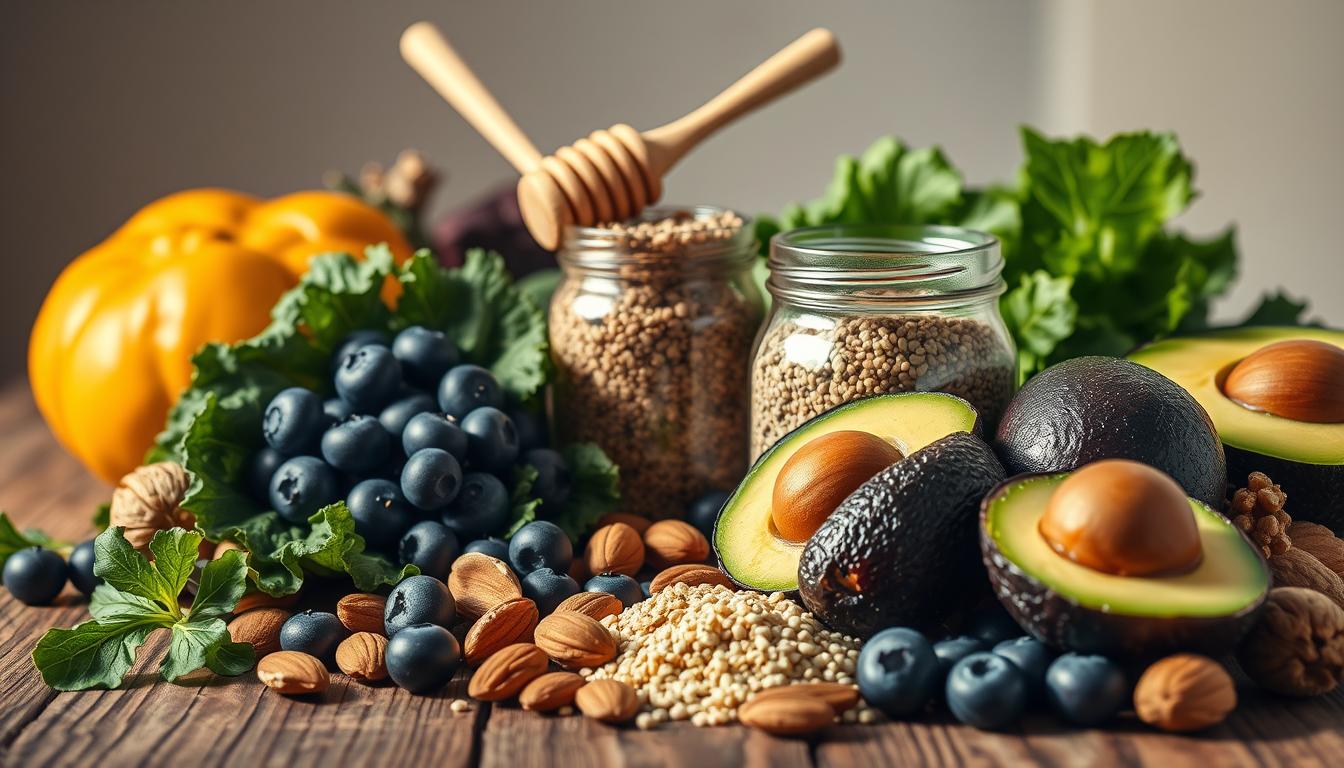
Adding nutrient-dense foods to your meals can greatly improve your health. These foods, known as superfoods, are full of vitamins, minerals, and antioxidants. They help increase energy and support a healthy lifestyle.
Eating foods rich in superfoods benefits can bring many good changes. It can make you feel more alert and improve your physical abilities. By choosing the right foods, you can take charge of your health.
Key Takeaways
- Incorporating nutrient-dense foods into your diet can boost energy levels.
- A diet rich in superfoods can support a healthy lifestyle.
- Nutrient-dense foods are packed with vitamins, minerals, and antioxidants.
- Eating a balanced diet can lead to improved mental clarity.
- A healthy diet can enhance physical performance.
What Makes a Food “Super”?
The term “superfoods” has become popular. It’s important to understand what makes some foods stand out. These foods are known for their high nutritional value and health benefits.
Definition of Superfoods
Superfoods are nutrient-dense foods packed with vitamins, minerals, and antioxidants. They are good for your health and help your body function well. They may also lower the risk of chronic diseases.
Nutritional Density Explained
Nutritional density is about how much good a food has compared to its calories. Foods like leafy greens and berries are full of nutrients but low in calories. This makes them great for a healthy diet.
Beyond the Hype: Science vs. Marketing
The term “superfood” might seem like a marketing trick. But, some foods really do have health benefits backed by science. For example, omega-3 fatty acids in salmon are good for your heart. It’s important to know the real benefits from science, not just marketing.
| Nutrient | Benefit | Food Sources |
|---|---|---|
| Antioxidants | Protect against cell damage | Blueberries, Spinach |
| Omega-3 Fatty Acids | Support heart health | Salmon, Walnuts |
| Fiber | Promote digestive health | Quinoa, Kale |
The Health Benefits of Including Superfoods in Your Diet
Adding superfoods to your meals can greatly improve your health. These foods are full of vitamins, minerals, and antioxidants. They help protect against many health problems.
Improved Immune Function
Blueberries and turmeric are great for boosting your immune system. They have antioxidants and nutrients that make your immune system stronger. By eating these foods regularly, you can improve your immune function and fight off illnesses better.
Disease Prevention Properties
Some superfoods can lower the risk of chronic diseases. For example, salmon is full of omega-3 fatty acids that fight heart disease. Kale has antioxidants that may prevent some cancers. Adding these foods to your diet can help prevent diseases.
Enhanced Energy and Vitality
Superfoods like quinoa are not just nutritious but also give you energy. Quinoa’s iron helps fight fatigue, and its complex carbs give you lasting energy. Eating these foods can make you feel more alive and well.
Here is a comparison of the nutritional benefits of some common superfoods:
| Superfood | Nutritional Benefits | Health Benefits |
|---|---|---|
| Blueberries | Rich in antioxidants, vitamins | Improved immune function, anti-aging |
| Salmon | High in omega-3 fatty acids, protein | Disease prevention, heart health |
| Quinoa | Complete protein, iron, complex carbohydrates | Enhanced energy, sustained vitality |
Common Misconceptions About Superfoods
The idea of superfoods is often misunderstood. It’s important to clear up these misconceptions. This way, we can better understand the role of these foods in our diet.
The “Miracle Food” Myth
Many think superfoods can fix all health problems. But, they are just part of a healthy diet. They shouldn’t be the only thing we eat.
Exotic vs. Local Superfoods
Some believe superfoods must be rare and expensive. But, many local foods are just as nutritious. This myth can make us spend too much on imported foods.
Supplement Forms vs. Whole Foods
Some think superfood supplements are as good as eating the real thing. But, whole foods give us more nutrients and fiber. Supplements can’t replace that.
| Myth | Reality |
|---|---|
| Superfoods are miracle cures. | They are part of a balanced diet. |
| Superfoods must be exotic. | Local foods can also be superfoods. |
| Supplements are as good as whole foods. | Whole foods offer more nutritional benefits. |
Knowing these myths helps us make better choices. We can focus on eating well and sustainably.
Top 5 Superfoods You Should Try
The world of superfoods is vast and exciting. Some stand out for their amazing nutritional value. It’s key to pick the best ones for our health.
Choosing superfoods involves looking at a few things. We focus on their nutrient density, antioxidant levels, and how easy they are to add to our meals.
Selection Criteria
The selection criteria for top superfoods are clear. They’re picked for their nutritional profile, which includes lots of vitamins, minerals, and antioxidants. They also need to offer health benefits, like better heart health or brain function.
Accessibility and Affordability Factors
Superfoods don’t have to be expensive. Many affordable options exist. Seasonal availability, local produce, and different forms (frozen, canned, fresh) affect their cost. For example, frozen berries or canned salmon are just as nutritious and cheaper than fresh.
By looking at both nutritional value and practicality, we can make informed choices. This way, we can improve our health without breaking the bank.
Superfood #1: Blueberries
Blueberries are a standout among superfoods. They are packed with nutrients and offer many health benefits. These small fruits are versatile and full of goodness.
Nutritional Profile
Blueberries are a great source of vitamins C and K, manganese, and fiber. They are also high in antioxidants, thanks to anthocyanins. These compounds give them their deep blue color. A cup of blueberries gives you a lot of vitamin C and manganese you need daily.
Nutritional Highlights:
- High in Vitamins C and K
- Rich in Manganese and Dietary Fiber
- Antioxidant-rich due to Anthocyanins
Health Benefits
Eating blueberries can improve your heart health and brain function. They may also help manage diabetes. The antioxidants in blueberries fight oxidative stress and inflammation.
Key Health Benefits:
- Improves Heart Health
- Enhances Cognitive Function
- May Help Manage Diabetes
How to Incorporate Into Your Diet
It’s easy to add blueberries to your meals. You can eat them fresh, frozen, or dried. Try adding them to oatmeal, yogurt, or salads for a nutritional boost.
Simple Blueberry Recipes
Make a blueberry smoothie with yogurt and milk. Or, add blueberries to your pancake batter for a healthy breakfast. They’re also great on ice cream or oatmeal.
Example Recipe: Blueberry Oatmeal Bowl – Mix cooked oatmeal with fresh blueberries, honey, and almonds. It’s a nutritious and filling breakfast.
Superfood #2: Salmon
Salmon is a superfood packed with nutrients. It’s great for heart health and brain function. It’s easy to add to your diet.
Nutritional Profile
Salmon is full of omega-3 fatty acids. It also has lots of protein, vitamins, and minerals. Here’s what you get in a serving:
- High-quality protein for muscle repair
- Omega-3 fatty acids for heart health
- Vitamin D for bone health
- Selenium, an antioxidant that helps prevent cell damage
Health Benefits
Eating salmon can help you in many ways:
- Reduced inflammation: Salmon’s omega-3s lower inflammation, which fights chronic diseases.
- Improved heart health: Omega-3s in salmon also lower triglycerides and blood pressure, boosting heart health.
- Enhanced brain function: Salmon’s omega-3s support brain health, possibly reducing cognitive decline risk.
How to Incorporate Into Your Diet
There are many ways to add salmon to your meals:
- Grilled or baked as a main dish
- Added to salads for a protein boost
- Used in sushi or sashimi
- Included in pasta dishes or stir-fries
Sustainable Sourcing Tips
Choose sustainable seafood when picking salmon. Look for MSC (Marine Stewardship Council) certifications. This ensures your salmon is sourced responsibly, helping the environment and local communities.
Superfood #3: Kale
Kale is a superfood known for its amazing nutrition. It’s a leafy green that’s popular in many dishes. It’s loved for its health perks and how easy it is to cook with.
Nutritional Profile
Kale is packed with vitamins A, C, and K. It’s also a good source of minerals like calcium and iron. Just one cup of chopped kale has only 55 calories, making it a great choice for a healthy diet.
| Nutrient | Amount per Cup (Chopped) | % Daily Value |
|---|---|---|
| Vitamin A | 200% DV | 200% |
| Vitamin C | 134% DV | 134% |
| Calcium | 9% DV | 9% |
Health Benefits
Kale offers many health benefits. It’s good for your eyes because of vitamin A. It also helps with blood clotting because of vitamin K. Plus, it’s full of antioxidants that fight off free radicals.
Key Health Benefits:
- Supports eye health
- Aids in blood clotting
- Rich in antioxidants
How to Incorporate Into Your Diet
Adding kale to your meals is easy and tasty. You can toss it in salads, blend it into smoothies, or sauté it as a side.
To make kale more enjoyable, try massaging it with olive oil and your favorite seasonings. This makes it soft and tasty.
Superfood #4: Quinoa
Quinoa is known as a superfood and has been a key food for centuries. It’s packed with nutrients and has a special mix of protein, fiber, and minerals. This makes it a great choice for a healthy diet.
Nutritional Profile
Quinoa is a complete protein, which means it has all nine essential amino acids. This is great for vegetarians and vegans. It’s also full of fiber, iron, magnesium, and potassium, making it a nutritional powerhouse.
| Nutrient | Amount per 1 cup cooked | % Daily Value |
|---|---|---|
| Protein | 8g | 15% |
| Fiber | 5g | 20% |
| Iron | 2mg | 10% |
| Magnesium | 150mg | 37% |
Health Benefits
Quinoa is good for your heart because it reduces inflammation and improves blood lipids. It’s also high in fiber, which is good for your digestive health. Plus, it’s a great gluten-free option for those who can’t eat gluten.
How to Incorporate Into Your Diet
Adding quinoa to your meals is easy because it’s so versatile. You can serve it as a side dish, add it to salads, or use it as a base for bowls. It’s also a good substitute for other grains in baking.
Quinoa Cooking Techniques
To cook quinoa, first rinse it. Then, cook it in water or broth with a 2:1 liquid to quinoa ratio. Bring it to a boil, then lower the heat to low, cover, and simmer for 15-20 minutes. It’s ready when the water is absorbed and the quinoa is tender.
Superfood #5: Turmeric
Turmeric is a superfood known for its strong anti-inflammatory effects and rich nutrients. This bright yellow spice has been used in traditional medicine and cooking, especially in Indian dishes, for many years.
Nutritional Profile
Turmeric’s value comes from curcumin, a compound with strong antioxidant and anti-inflammatory properties. It’s also a rich source of vitamins and minerals. Turmeric is packed with dietary fiber, vitamin C, and potassium.
- Curcumin: Powerful antioxidant and anti-inflammatory agent
- Vitamin C: Boosts immune function
- Potassium: Essential for heart health
Health Benefits
Turmeric offers many health benefits. Its anti-inflammatory effects can lower the risk of heart disease, diabetes, and some cancers. It also improves brain function and may help with arthritis.
- Reduces inflammation and improves symptoms of arthritis
- May help in managing chronic diseases like heart disease and diabetes
- Enhances cognitive function and potentially aids in neurodegenerative diseases
How to Incorporate Into Your Diet
Adding turmeric to your meals is easy. You can mix it into curries, soups, teas, and smoothies. Making a turmeric latte or golden milk is a simple way to enjoy it.
Enhancing Absorption with Black Pepper
Curcumin’s absorption is boosted when eaten with black pepper. Combining turmeric with black pepper can increase curcumin absorption by up to 2,000%. Adding a bit of black pepper to your turmeric dishes can enhance its health benefits.
Creating a Balanced Superfood-Rich Meal Plan
Creating a meal plan rich in superfoods is easier than you think. It can significantly boost your nutritional intake. By adding a variety of superfoods to your diet, you get a wide range of nutrients.
Breakfast Ideas
Start your day with a nutritious breakfast that includes superfoods. Try a bowl of blueberry oatmeal with a sprinkle of turmeric for anti-inflammatory benefits. Or, enjoy a kale and quinoa breakfast bowl with citrus dressing for a tasty and filling meal.
Lunch and Dinner Suggestions
For lunch, try a salmon salad with mixed greens, quinoa, and various vegetables. It’s a satisfying meal. For dinner, sauté kale with garlic as a side to salmon or chicken. Adding turmeric to your meals, as a spice in soups or tea, boosts their nutritional value.
Snacks and Smoothies
Snacking on superfoods is easy and convenient. Blueberries are great on their own or in yogurt or oatmeal. A smoothie with kale, blueberries, and banana is quick and nutritious.
Weekly Shopping List Template
To help you start, here’s a basic shopping list template:
- Blueberries
- Salmon fillets
- Kale
- Quinoa
- Turmeric
This list can be adjusted based on your dietary preferences and the recipes you choose for your meal plan.
Conclusion
Adding superfoods to your diet can make a big difference in your health. Foods like blueberries, salmon, kale, quinoa, and turmeric are packed with benefits. They boost your immune system and give you more energy.
Eating a diet full of these superfoods can make you feel better overall. It can also help prevent diseases. By learning about the superfoods benefits and adding them to your meals, you’re taking a smart step towards healthy eating habits.
This summary shows how important it is to eat foods that are full of nutrients. These foods make your diet better. Start making your meals healthier by adding these superfoods every day.
Choosing the right foods can greatly improve your health and wellbeing. Start by adding these nutrient-rich foods to your diet. You’ll see the benefits for yourself.