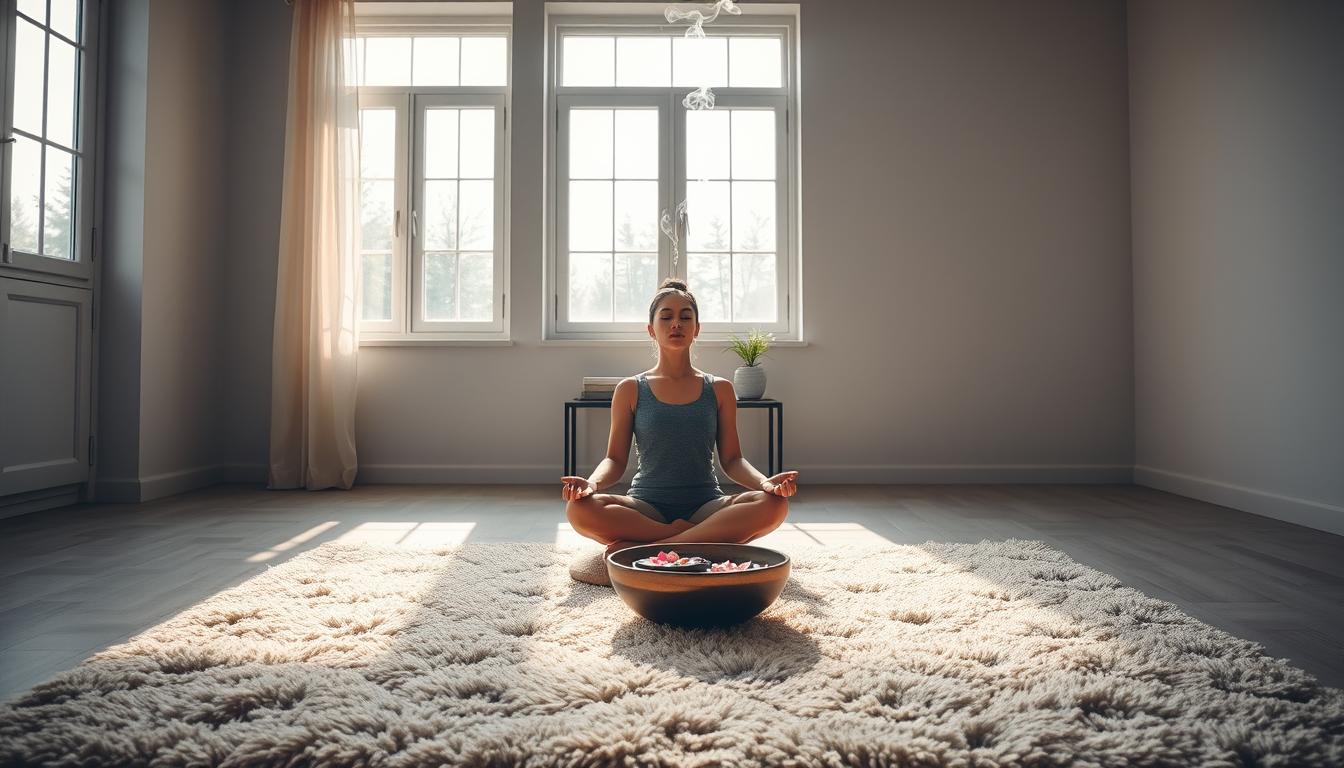
Simple Breathing Techniques to Relax
In today’s fast-paced world, stress relief is more crucial than ever. One effective way to achieve relaxation is through breathing exercises. These relaxation techniques help calm the mind and body, promoting overall well-being.
By incorporating breathing exercises into your daily routine, you can better manage stress and anxiety. Regular practice can lead to improved mental clarity and a sense of calm. This makes it easier to navigate life’s challenges.
Key Takeaways
- Breathing exercises can reduce stress and anxiety.
- Regular practice improves mental clarity.
- Relaxation techniques promote overall well-being.
- Incorporating breathing exercises into daily life is beneficial.
- These techniques can be practiced anywhere, at any time.
The Science of Breathing and Stress Response
Understanding how breathing works is key to seeing its impact on stress and relaxation. Our breathing affects our nervous system, which controls how we handle stress.
How Breathing Affects Your Nervous System
The nervous system manages our body’s stress response. Breathing techniques can greatly affect this, helping us move from stress to calm. Deep, slow breaths activate the parasympathetic nervous system, leading to relaxation and less stress.
The effect of breathing on the nervous system is shown in the table below:
| Breathing Type | Nervous System Response | Effect on Stress |
|---|---|---|
| Deep, Slow Breathing | Activates Parasympathetic Nervous System | Reduces Stress |
| Shallow, Rapid Breathing | Activates Sympathetic Nervous System | Increases Stress |
The Physiological Connection Between Breath and Relaxation
The link between breathing and relaxation is intricate, involving many body systems. Controlled breathing lowers heart rate, blood pressure, and cortisol, all signs of stress. This shows how the body can relax and recover when we breathe correctly.
Benefits of Controlled Breathing Practices
Adding controlled breathing to your daily routine can greatly improve your health. It offers many benefits, from better physical health to improved mental and emotional wellbeing.
Physical Health Benefits
Controlled breathing can make your heart and lungs work better. It lowers blood pressure and heart rate. It also makes breathing more efficient, bringing more oxygen to your body.
Regular practice strengthens your diaphragm and improves lung function. This can lead to better overall health.
Mental and Emotional Benefits
Controlled breathing can reduce stress and anxiety. It helps calm your mind and relax your body. This practice also improves focus and mental clarity.
It makes it easier to handle daily tasks. You’ll feel more focused and clear-headed.
Long-term Effects on Overall Wellbeing
Long-term controlled breathing practice boosts overall wellbeing. It keeps your nervous system balanced. It also leads to better sleep quality.
It helps you handle stress better. This improves your quality of life over time.
Here is a summary of the benefits in a comparative format:
| Benefits | Short-term Effects | Long-term Effects |
|---|---|---|
| Physical Health | Improved cardiovascular health | Sustained cardiovascular health |
| Mental/Emotional | Reduced stress and anxiety | Enhanced mental clarity and sustained calmness |
| Overall Wellbeing | Better relaxation | Better sleep quality and stress coping mechanisms |
Simple Breathing Techniques to Relax
In today’s fast world, learning simple breathing techniques can change your life. These methods calm your mind and body, boosting your well-being. By adding them to your daily routine, you can handle stress better and live a happier life.
Diaphragmatic (Belly) Breathing
Diaphragmatic breathing, or belly breathing, uses the diaphragm muscle. It’s more effective than shallow chest breathing and can lower stress and anxiety.
Step-by-Step Instructions
To do diaphragmatic breathing, place one hand on your belly and the other on your chest. Breathe in deeply through your nose, letting your belly rise. Your chest should not move. Breathe out slowly through your mouth, letting your belly fall. Keep practicing, focusing on your belly’s rise and fall.
Tips for Mastery
Mastering diaphragmatic breathing takes regular practice, best in a quiet spot. Begin with short sessions and increase time as you get better. Practice when you’re not stressed to make it easier during stressful times.
4-7-8 Breathing Technique
The 4-7-8 technique, or “relaxation breath,” involves breathing in, holding, and exhaling. It slows your heart rate and promotes relaxation.
How to Perform It Correctly
To do the 4-7-8 technique, sit comfortably with your back straight. Close your eyes and breathe in through your nose for 4 counts. Hold for 7 counts. Exhale through your mouth for 8 counts. Repeat for several minutes.
When to Use This Technique
Use the 4-7-8 technique when stressed or anxious. It’s also great before bed for better sleep. Regular use can help you relax and reduce stress.
Box Breathing
Box breathing, or square breathing, is used by those in high-stress jobs. It involves breathing in for 4 counts, holding for 4 counts, exhaling for 4 counts, and holding again for 4 counts.
The Four-Step Process
To practice box breathing, sit comfortably with your back straight. Breathe in for 4 counts, hold for 4 counts. Exhale for 4 counts, then hold again for 4 counts. This creates a “box” shape with your breath.
Benefits for Stress Management
Box breathing calms the mind and reduces stress by focusing on breathing. Regular practice improves your calmness under pressure. It’s a simple yet effective way to manage stress and improve well-being.
Alternate Nostril Breathing
Alternate nostril breathing is a yoga technique. It involves closing one nostril and breathing in through the other, then switching to breathe out through the other nostril. This technique balances the breath and calms the mind.
Proper Hand Position and Technique
To practice alternate nostril breathing, sit comfortably with your back straight. Close your right nostril with your right hand, inhaling through your left. Then, close your left nostril with your ring finger and exhale through your right. Inhale through your right nostril, close it, and exhale through your left. Keep alternating.
Effects on Mental Balance
Alternate nostril breathing balances the breath and calms the mind, reducing stress and anxiety. Regular practice improves your overall well-being and mental clarity. It’s a powerful technique for relaxation and stress reduction.
Mindful Breathing Practices
Mindful breathing can make your life more balanced and peaceful. It means being fully present and focused on your breath. This helps you feel more aware and calm.
There are two key techniques for mindful breathing: Breath Awareness Meditation and Counting Breaths. These methods help your mind focus and relax.
Breath Awareness Meditation
Breath awareness meditation is a basic mindfulness practice. It involves watching your breath without trying to control it. By focusing on the breath, you can find calm and concentration.
This practice makes you more aware of the present moment. It reduces mind-wandering and stress. Regular practice can improve emotional control and overall wellbeing.
To start, sit comfortably with your eyes closed. Focus on your breath. Notice the air moving in and out of your body.
Counting Breaths
Counting breaths is another great way to practice mindfulness. It involves counting each breath, usually during exhalation. This simple method can calm your mind and improve focus.
To count breaths, inhale and exhale naturally. Count “one” during exhalation. Keep counting until you reach ten, then start again.
Here’s a comparison of Breath Awareness Meditation and Counting Breaths:
| Practice | Primary Focus | Benefits |
|---|---|---|
| Breath Awareness Meditation | Observing the breath without control | Improved emotional regulation, reduced stress |
| Counting Breaths | Counting each breath to maintain focus | Improved concentration, calmer mind |
Both practices can be tailored to fit your needs. They’re great for anyone wanting to add mindfulness to their daily life.
Breathing Techniques for Specific Situations
Breathing techniques are versatile and can be used in many situations. They help manage health and wellbeing.
Life’s challenges require different breathing approaches. Knowing how to use these techniques can help with stress, sleep, focus, and anxiety.
For Immediate Stress Relief
The 4-7-8 Breathing Technique is great for quick stress relief. Breathe in for 4 counts, hold for 7, and exhale for 8. It calms the nervous system fast.
Key steps:
- Inhale for a count of 4
- Hold breath for 7
- Exhale for 8
For Better Sleep
Diaphragmatic breathing improves sleep. It focuses on expanding the belly, not the chest. This relaxes the body and prepares it for sleep.
To practice diaphragmatic breathing:
- Place one hand on the belly and the other on the chest
- Inhale deeply through the nose, allowing the belly to rise
- Exhale slowly, feeling the belly fall
For Focus and Concentration
Box Breathing boosts focus. Breathe in for 4 counts, hold for 4, exhale for 4, and hold again for 4. It creates a “box” shape with the breath, improving concentration.
Regular Box Breathing practice enhances focus on tasks.
For Managing Anxiety Attacks
Alternate Nostril Breathing calms the mind and body during anxiety attacks. Close one nostril and inhale through the other, then switch to exhale through the other nostril.
This balanced breathing reduces anxiety and brings calm.
Using these breathing techniques daily can help manage stress, improve sleep, enhance focus, and cope with anxiety.
Breathing Practices Across Different Traditions
Breathing techniques have evolved from ancient times to modern days. They cater to different cultures and health needs. These practices help with relaxation and improve physical health.
Pranayama in Yoga
Pranayama, or breath control, is key in yoga. It uses various methods to manage breathing. This affects the body’s energy and readies it for meditation.
Pranayama includes bhastrika (bellows breath) and kapalabhati (skull shining breath). These techniques clean the body and calm the mind.
A study on yoga and pranayama showed benefits. Regular practice lowers stress and anxiety. It also boosts overall well-being.
“Yoga and pranayama can be used as a therapeutic tool to improve physical, mental, and emotional health.”
Qigong Breathing Techniques
Qigong is an ancient Chinese practice. It combines movement, meditation, and controlled breathing. This practice aims to balance the body’s energy, or “qi.”
Qigong breathing helps improve qi flow. This promotes health and energy. Practitioners breathe slowly while moving.
| Practice | Breathing Technique | Primary Benefit |
|---|---|---|
| Pranayama | Bhastrika, Kapalabhati | Stress reduction, mental clarity |
| Qigong | Slow, coordinated breathing | Enhanced energy flow, relaxation |
Modern Adaptations in Therapy
Modern therapy has adopted traditional breathing practices. Techniques like Holotropic Breathwork and Rebirthing-Breathwork aid in emotional healing. They are used in clinics to manage stress and anxiety.
Exploring these breathing practices helps individuals find what works best for them. This can greatly improve their well-being.
Incorporating Breathing Exercises Into Your Daily Routine
Adding breathing techniques to your daily life can be easy and helpful. It boosts your wellbeing and helps you deal with stress better.
Jon Kabat-Zinn, a well-known mindfulness expert, once said, “You can’t stop the waves, but you can learn to surf.” This shows how important it is to manage stress with practices like breathing exercises.
Morning Breathing Rituals
Starting your day with breathing can make it better. Begin with 5 minutes of diaphragmatic breathing to wake up your body and calm your mind. This helps keep you balanced all day.
Breathing Breaks Throughout the Day
Short breathing breaks can cut down stress a lot. Take a few minutes every hour for a simple technique like the 4-7-8 method. It keeps you focused and refreshed.
Evening Wind-Down Practices
Evening practices are key for a good night’s sleep. Try a 10-minute box breathing or gentle alternate nostril breathing to calm your system. It prepares your body for restful sleep, so you’re ready for tomorrow.
By adding these breathing exercises to your daily routine, you can live a more balanced and stress-free life. Remember, being consistent is crucial. Make these practices a regular part of your day.
Common Mistakes and How to Avoid Them
To get the most out of breathing exercises, it’s key to steer clear of common errors. These include incorrect breathing patterns, forcing or straining, and inconsistent practice. Knowing these mistakes can make your breathing practice safer and more effective.
Incorrect Breathing Patterns
One big mistake is using incorrect breathing patterns. This might mean breathing too shallowly or too fast. To fix this, focus on using your diaphragm and keeping your breathing steady and relaxed.
Diaphragmatic breathing, where the diaphragm moves up and down, helps the lungs fill with air better. It can lower stress and boost breathing health.
Forcing or Straining
Forcing or straining during breathing exercises is another common mistake. It can cause tension and discomfort, undoing the relaxing effects. It’s important to breathe naturally and smoothly, without pushing too hard.
If you start to strain, pause and relax for a bit. Then, gently start again when you’re calm.
Inconsistent Practice
Inconsistent practice can also lessen the benefits of breathing exercises. Regular practice is needed to see lasting results. Make breathing exercises a part of your daily routine, like in the morning or before bed.
Sticking to it will help you build a habit. This way, you can enjoy the long-term benefits of controlled breathing, like less stress and better well-being.
Conclusion
Simple breathing techniques can greatly help us relax and reduce stress. They work by affecting our nervous system. This makes them a powerful tool for better wellbeing.
There are many breathing techniques to choose from. You can pick one that fits your needs and likes. Whether you want to calm down fast, sleep better, or focus more, there’s a technique for you.
Adding these techniques to your daily life can lead to lasting benefits. Start with small steps and stick to it. This way, you can fully enjoy the benefits of breathing for a happier, more balanced life.