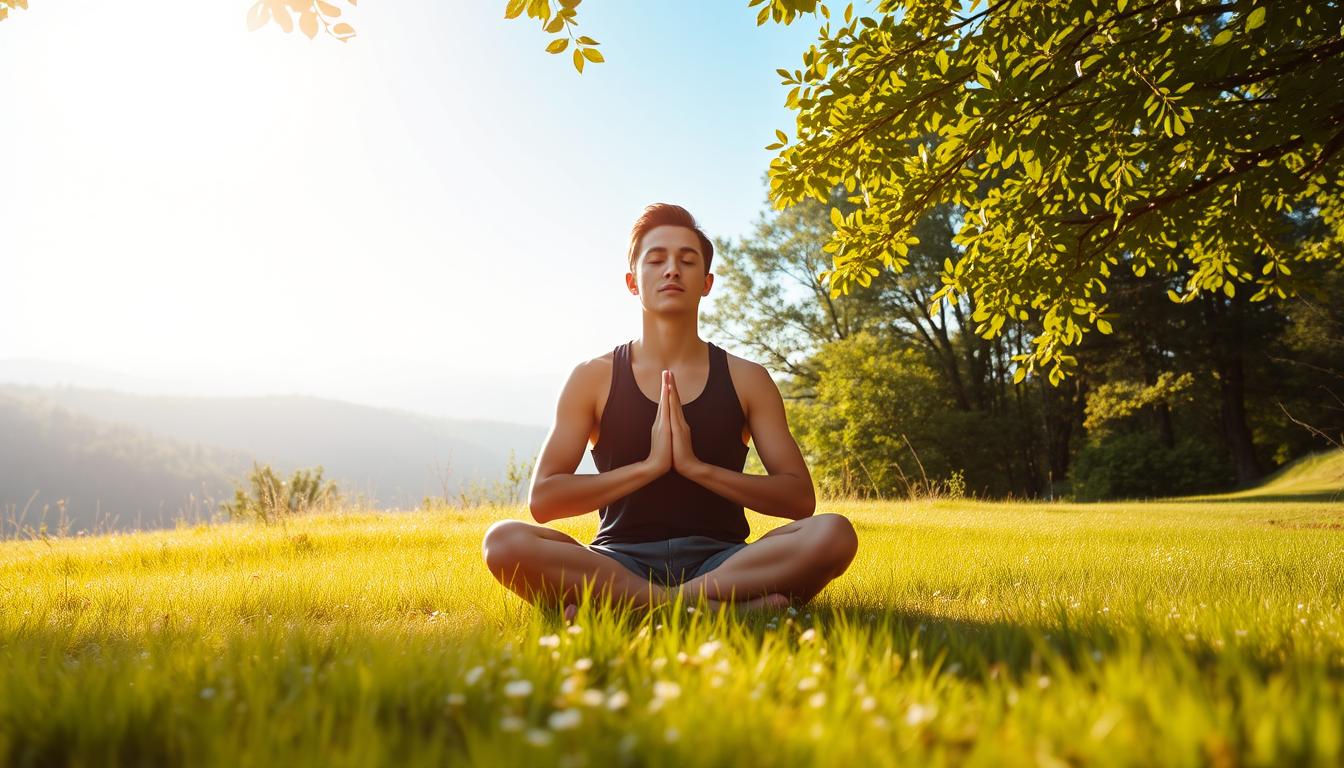
In today’s fast-paced world, stress relief techniques are essential for maintaining mental well-being. With increasingly demanding lifestyles, it’s easy to feel overwhelmed and anxious.
Fortunately, quick stress reduction methods can be applied anywhere, anytime, providing a much-needed respite from the pressures of daily life.
This article will explore various stress relief techniques that can be used to achieve a sense of calm and relaxation in just a few minutes.
Key Takeaways
- Discover simple and effective stress relief techniques.
- Learn how to apply quick stress reduction methods in daily life.
- Understand the importance of managing stress for overall well-being.
- Explore various techniques for achieving calm and relaxation.
- Improve mental health with quick and accessible stress relief methods.
The Science Behind Quick Stress Relief
The physiological effects of stress on the human body are multifaceted and far-reaching. Stress triggers a cascade of reactions that prepare the body to either confront or flee from the perceived threat, known as the “fight or flight” response.
How Stress Affects Your Body and Mind
When stressed, the body releases stress hormones like cortisol and adrenaline. These hormones increase heart rate, blood pressure, and energy supplies. Chronic stress can lead to issues like anxiety, depression, and cardiovascular diseases.
| Physiological Response | Short-Term Effects | Long-Term Effects |
|---|---|---|
| Increased Heart Rate | Prepares body for action | Cardiovascular strain |
| Cortisol Release | Boosts energy | Disrupts sleep, metabolism |
Why Short Interventions Can Be Effective
Short stress relief interventions can be effective because they interrupt the stress response, giving the body a chance to recover. Techniques like deep breathing, progressive muscle relaxation, and mindfulness can reduce stress hormones and promote relaxation.
By understanding how stress affects the body and mind, individuals can better appreciate the value of quick stress relief strategies. Effective stress management is crucial for overall well-being.
How to Reduce Stress in 5 Minutes Through Breathing
The art of breathing can be a potent antidote to stress, offering relief in just a few minutes. By focusing on specific breathing techniques, individuals can calm their nervous system, reduce anxiety, and regain a sense of control.
There are several effective methods to achieve relaxation through breathing. Here, we’ll explore three techniques that can be practiced almost anywhere, at any time.
Box Breathing Method
The Box Breathing Method involves breathing in for a count of 4, holding the breath for a count of 4, exhaling for a count of 4, and then holding the exhale for a count of 4. This creates a “box” shape with your breath, promoting balance and calmness.
- Find a comfortable seated position with your back straight.
- Close your eyes and begin by inhaling through your nose for a count of 4.
- Hold your breath for a count of 4.
- Exhale through your mouth for a count of 4.
- Hold your exhale for a count of 4.
- Repeat for 5 minutes.
4-7-8 Breathing Technique
The 4-7-8 Breathing Technique, also known as the “Relaxation Breath,” involves breathing in through the nose, holding the breath, and exhaling through the mouth. This technique can help slow down your heart rate and promote relaxation.
- Inhale through your nose for a count of 4.
- Hold your breath for a count of 7.
- Exhale through your mouth for a count of 8.
- Repeat the cycle for 5 minutes.
Alternate Nostril Breathing
Alternate Nostril Breathing is a yoga breathing technique that balances the breath and calms the nervous system. It’s believed to balance the left and right hemispheres of the brain.
To practice:
- Close your right nostril with your thumb and inhale through your left nostril.
- Close your left nostril with your ring finger and exhale through your right nostril.
- Inhale through your right nostril, close it with your thumb, and exhale through your left nostril.
- Continue alternating for 5 minutes.
These breathing techniques for stress relief can be practiced anywhere and at any time, providing a quick and effective way to manage stress. Regular practice can lead to better overall well-being and resilience to stress.
| Breathing Technique | Steps | Benefits |
|---|---|---|
| Box Breathing | Inhale (4), Hold (4), Exhale (4), Hold (4) | Promotes balance and calmness |
| 4-7-8 Breathing | Inhale (4), Hold (7), Exhale (8) | Slows down heart rate, promotes relaxation |
| Alternate Nostril Breathing | Alternate nostrils with each breath | Balances the breath, calms the nervous system |
Physical Movement Strategies for Immediate Relief
Simple physical movements can provide immediate relief from stress and tension. Incorporating these techniques into your daily routine can help reduce overall stress levels and improve your ability to handle challenging situations.
Physical movement strategies are effective because they help shift your focus away from stressors and release tension from your body. By engaging in short, simple exercises, you can calm your nervous system and regain a sense of control.
Quick Desk Stretches
Quick desk stretches are an excellent way to relieve stress when you are at work or cannot leave your desk. These stretches can help loosen tight muscles and improve circulation.
- Neck stretches: Slowly tilt your head to the side, bringing your ear towards your shoulder.
- Shoulder rolls: Roll your shoulders forward and backward in a circular motion.
- Wrist extensions: Gently extend your wrists, holding for a few seconds before releasing.
These simple stretches can be done discreetly and can make a significant difference in how you feel.
Progressive Muscle Relaxation
Progressive muscle relaxation involves tensing and relaxing different muscle groups to release physical tension. Start by tensing your toes, holding for a few seconds, and then releasing. Move up through your body, tensing and relaxing each muscle group.
“Progressive muscle relaxation is a powerful technique for reducing stress and anxiety. It helps to release physical tension and promote relaxation.”
This technique can be practiced anywhere and is particularly effective when combined with deep breathing.
Stress-Relieving Hand and Facial Exercises
Hand and facial exercises can help relieve tension and reduce stress. Try simple exercises like spreading your fingers wide and then bringing them together, or gently massaging your temples.
| Exercise | Description | Benefits |
|---|---|---|
| Hand spreading | Spread fingers wide and then bring together | Relieves tension, improves circulation |
| Temple massage | Gently massage temples with fingertips | Reduces headache tension, promotes relaxation |
| Facial stretch | Stretch facial muscles by making exaggerated expressions | Relaxes facial muscles, reduces stress |
By incorporating these physical movement strategies into your daily routine, you can effectively manage stress and improve your overall well-being.
5-Minute Mindfulness Practices for Any Situation
The beauty of mindfulness lies in its flexibility and the ability to reduce stress in just a few minutes. Mindfulness practices can be seamlessly integrated into daily life, providing a quick and effective way to manage stress and increase calmness.
Brief Meditation Techniques
One of the simplest ways to practice mindfulness is through brief meditation techniques. Focusing on your breath or a mantra can help calm the mind and reduce stress. A study published in the Journal of the American Medical Association found that mindfulness meditation can help reduce anxiety and depression.
Key steps for a quick meditation:
- Find a quiet spot to sit comfortably
- Close your eyes and focus on your breath
- When your mind wanders, gently bring it back to your breath
- Start with short sessions, like 2-3 minutes, and gradually increase
Grounding Exercises Using Your 5 Senses
Grounding exercises are another effective mindfulness practice that can be done in any situation. By engaging your five senses, you can bring your focus to the present moment and away from stress.
Examples of grounding exercises include:
| Sense | Exercise |
|---|---|
| Sight | Notice the colors and details of an object |
| Sound | Listen to the sounds around you without judgment |
| Smell | Take a deep breath and appreciate a pleasant scent |
| Taste | Savor a piece of fruit or a mint |
| Touch | Feel the texture of an object or the ground beneath your feet |
Mindful Walking or Movement
Mindful walking or movement is a great way to combine physical activity with mindfulness. Paying attention to your steps or the sensations in your body can help you stay present.
“The present moment is the only moment available to us, and it is the door to all moments.” – Thich Nhat Hanh
Mindful walking can be as simple as paying attention to your feet touching the ground, the sensation of your muscles moving, or the rhythm of your breath while walking.
Cognitive Techniques to Quickly Shift Your Mindset
Cognitive techniques offer a powerful way to reduce stress by changing how we think and perceive our environment. By employing these strategies, individuals can quickly shift their mindset and alleviate stress.
Thought Stopping and Reframing
Thought stopping involves interrupting negative thought patterns, while reframing helps to reinterpret these thoughts in a more positive or realistic light. This technique can be particularly effective in managing stress by altering the perception of stressful situations.
To practice thought stopping, one can say to themselves, “Stop!” when they catch themselves in a negative thought loop. Reframing can then be applied by finding a more balanced or positive perspective on the situation.
Power of Quick Positive Affirmations
Positive affirmations are short, powerful statements that can help to rewire the brain, promoting a more positive mindset. Repeating affirmations such as “I am capable of handling this challenge” can help to reduce stress and boost confidence.
The key to effective affirmations is repetition and belief. By regularly practicing positive affirmations, individuals can begin to shift their mindset and develop a more resilient approach to stress.
The 5-Minute Journaling Method
Journaling is a therapeutic activity that can help to process emotions and gain perspective. The 5-minute journaling method involves dedicating a short, consistent period to writing down thoughts, feelings, and gratitudes.
This practice can help to clear the mind, reduce stress, and foster a more positive outlook. By focusing on what one is grateful for, individuals can shift their mindset towards a more optimistic state.
Sensory Tools to Calm Your Nervous System Fast
Engaging our senses can be a powerful way to calm the nervous system rapidly. Our senses play a significant role in how we perceive and react to stress. By utilizing specific sensory tools, we can effectively reduce stress and anxiety in just a few minutes.
Aromatherapy and Essential Oils
Aromatherapy is a popular method for achieving quick relaxation. Certain scents, such as lavender and chamomile, have been shown to have a calming effect on the nervous system. Using essential oils in a diffuser or applying them to the skin (diluted) can provide immediate relief from stress.
Lavender oil, for instance, is known for its calming properties, while peppermint oil can help invigorate and refresh the mind. Incorporating aromatherapy into your daily routine can be as simple as carrying a small bottle of essential oil or using scented candles.
Music and Sound Therapy
Music and sound therapy are effective tools for stress relief. Listening to calming music or nature sounds can significantly reduce anxiety. Research has shown that certain types of music can lower cortisol levels, heart rate, and blood pressure.
Creating a playlist of calming music or using an app that offers sound therapy can be a convenient way to achieve relaxation. Classical music and rainfall sounds are particularly effective for many individuals.
“Music is the divine way to tell beautiful, poetic things to the heart.” – Pablo Casals
Cold Exposure and Temperature Change
Cold exposure, such as taking a cold shower, can be an effective way to reduce stress. The sudden change in temperature can help stimulate the body’s natural response to stress, thereby reducing anxiety.
| Sensory Tool | Method | Benefits |
|---|---|---|
| Aromatherapy | Using essential oils in a diffuser or on the skin | Calms the nervous system, reduces anxiety |
| Music and Sound Therapy | Listening to calming music or nature sounds | Lowers cortisol levels, heart rate, and blood pressure |
| Cold Exposure | Taking a cold shower or using cold packs | Stimulates the body’s natural stress response, reduces anxiety |
Conclusion: Building a Toolkit of 5-Minute Stress Busters
By incorporating the techniques discussed, you can create a personalized stress management toolkit that helps you navigate life’s challenges with ease. Regular practice of these calmness techniques will lead to lasting stress relief and improved well-being.
A well-rounded stress management toolkit includes a mix of breathing exercises, physical movements, mindfulness practices, cognitive techniques, and sensory tools. Experiment with different methods to find what works best for you, and make them a part of your daily routine.
Developing a stress management toolkit is a journey, and it’s essential to be patient and consistent. By doing so, you’ll be better equipped to handle stress and maintain a sense of calm in any situation, ultimately enhancing your overall quality of life with effective calmness techniques and a robust stress management toolkit.