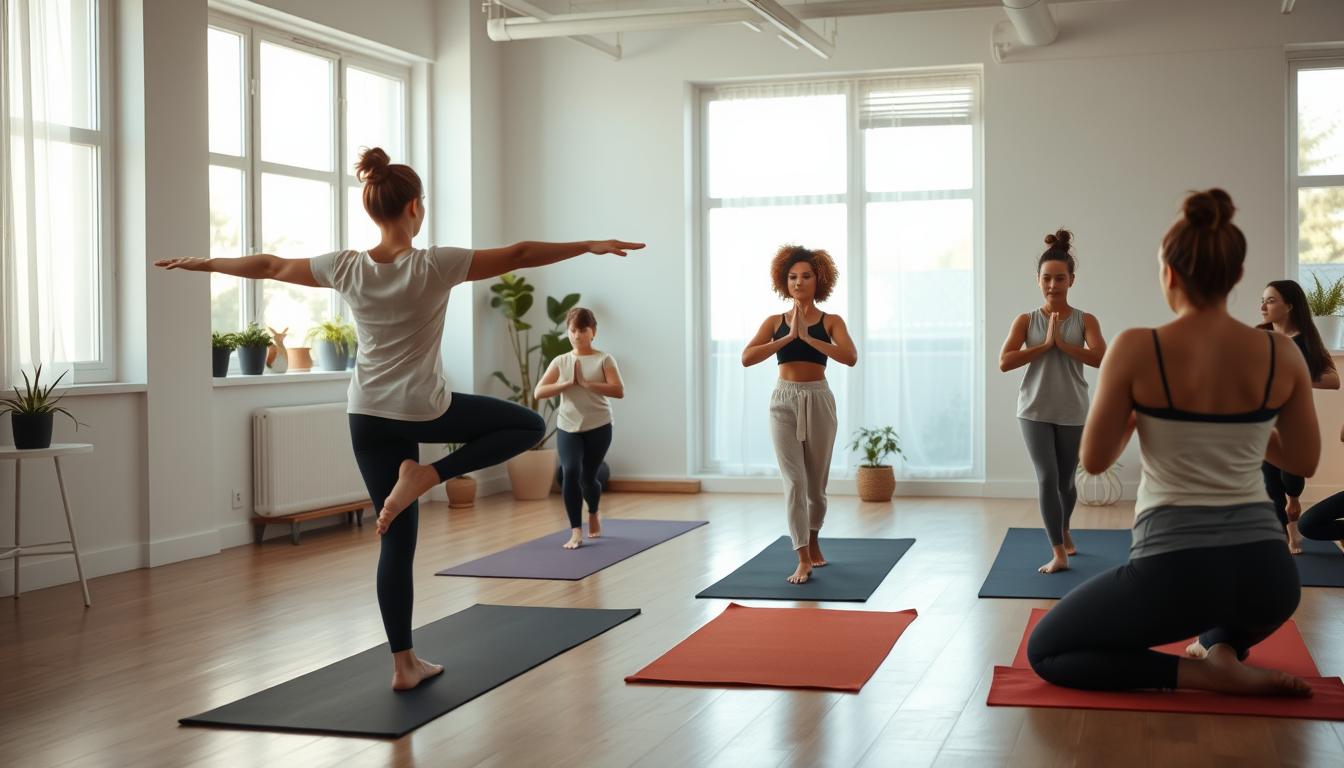
Starting a yoga journey can change your life, offering many benefits. For newbies, adding simple poses to your daily routine is a good way to begin.
It might seem hard to start yoga, but basic yoga poses are a great start. They help beginners build a solid base. Regular practice can also improve your flexibility, balance, and overall health.
Key Takeaways
- Yoga improves flexibility and balance
- Simple poses are perfect for beginners
- Daily practice enhances overall well-being
- Yoga reduces stress and anxiety
- Regular practice boosts mental clarity
The Benefits of a Daily Yoga Practice
Adding yoga to your daily routine can change your body and mind. It brings many benefits that improve your overall health.
Physical Benefits for Flexibility and Strength
Daily yoga boosts flexibility by stretching muscles. It also increases strength by working out different muscle groups.
| Physical Benefits | Description |
|---|---|
| Flexibility | Improves range of motion and reduces stiffness |
| Strength | Builds muscle endurance and power |
Mental and Emotional Well-being
Yoga is great for your mind and emotions. It lowers stress and anxiety by calming your mind. Regular practice can make you feel happier and more emotionally stable.
Building a Sustainable Practice Habit
Being consistent is important to get the most from yoga. Adding yoga to your daily routine helps you build a lasting habit. This habit supports your long-term health.
Essential Equipment and Space Setup
A well-prepared yoga space with the right equipment can boost your practice of simple yoga poses. To make an ideal spot for your yoga routines, think about what you need.
Choosing the Right Yoga Mat
Your yoga equipment starts with a good yoga mat. Pick one that offers the right grip and cushioning for your joints. This helps you stay in poses comfortably and prevents slipping.
Helpful Props for Beginners
As a beginner, using props like blocks, straps, and blankets can help. These tools let you adjust poses to fit your flexibility, making simple yoga poses easier.
Creating a Dedicated Practice Space
Choose a quiet, clutter-free spot for your practice. Make sure it’s well-ventilated and peaceful. This helps you focus on your yoga routines better.
Beginner Yoga Poses for Daily Practice
Starting a daily yoga routine can boost your flexibility, strength, and mental focus. Adding simple yoga poses to your day can greatly improve your well-being.
Standing Poses
Standing poses are key in yoga. They help improve balance, strength, and focus. They also prepare you for more complex poses, which are great for beginners.
Mountain Pose (Tadasana)
Mountain Pose is the base of all standing poses. It teaches you about posture, balance, and grounding. Stand with your feet hip-width apart, engage your core, and keep your arms by your sides.
Tree Pose (Vrksasana)
Tree Pose boosts balance and stability. Stand on one leg, with the other foot on your inner thigh. Keep your core tight and your arms up.
Warrior I & II (Virabhadrasana I & II)
Warrior Poses are strong standing poses. They strengthen your legs and hips. Warrior I involves stepping back with one foot, bending the front knee, and raising your arms. Warrior II is similar but with arms extended to the sides.
Seated Poses
Seated poses are great for stretching and relaxing. They help stretch your back, hips, and legs.
Easy Pose (Sukhasana)
Easy Pose is a simple pose that promotes flexibility and calmness. Sit with your legs crossed, engage your core, and relax your shoulders.
Seated Forward Fold (Paschimottanasana)
Seated Forward Fold stretches your back from shoulders to hips. Sit with your legs straight, then fold forward, trying to reach your toes.
Butterfly Pose (Baddha Konasana)
Butterfly Pose opens your hips. Sit with your legs bent, feet together, and let your knees fall apart.
Gentle Backbends and Twists
Gentle backbends and twists are vital for spinal flexibility and health.
Cat-Cow Stretch (Marjaryasana-Bitilasana)
Cat-Cow Stretch is a gentle flow that warms up your spine and boosts flexibility.
Child’s Pose (Balasana)
Child’s Pose is a resting pose that stretches your back and hips. Kneel on the mat, then sit back onto your heels and stretch your arms out.
Gentle Seated Twist (Ardha Matsyendrasana)
Gentle Seated Twist improves spinal flexibility and digestion. Sit with your legs crossed, then twist your torso to one side.
| Pose | Benefits | Precautions |
|---|---|---|
| Mountain Pose | Improves posture, balance | None |
| Tree Pose | Enhances balance, stability | Avoid if you have balance issues |
| Warrior I & II | Strengthens legs, hips | Be cautious with knee injuries |
“Yoga is the journey of the self, through the self, to the self.” – The Bhagavad Gita
Proper Form and Alignment Fundamentals
Learning proper form and alignment is key for a safe yoga practice. It makes sure you get the most from each pose and lowers injury risk.
Protecting Your Joints and Spine
Keeping your joints and spine safe is a big deal in yoga. Wrong alignment can harm these areas, leading to injuries. By focusing on right alignment, you protect your body, making yoga a long-term activity.
Breath and Movement Coordination
Linking your breath with movement is vital in yoga. Synchronizing your breath with your movements makes your practice better. It helps you move smoothly between poses and gets you into a meditative state.
Using Modifications for Your Body Type
It’s important to use modifications that fit your body type for a good practice. These adjustments help you make poses safe and beneficial for you.
| Body Type | Common Modifications | Benefits |
|---|---|---|
| Tight Hamstrings | Bent knees in forward bends | Reduces strain on lower back |
| Lower Back Issues | Engaging core, avoiding deep backbends | Protects the spine |
| Shoulder or Neck Issues | Avoiding shoulder stands or modifying with support | Prevents strain on sensitive areas |
By following these basics, you’ll enjoy a more rewarding and lasting yoga journey.
“The key to a successful yoga practice lies not in the complexity of the poses, but in the consistency and awareness with which they are practiced.”
Creating a 15-Minute Daily Sequence
Yoga sequences for different times of the day can boost your practice. Just 15 minutes a day can make you more flexible, less stressed, and more energetic. A good sequence can meet your goals, whether it’s to wake you up in the morning or calm you down at night.
Morning Energizing Sequence
Begin your day with a refreshing sequence. It should include Surya Namaskar (Sun Salutation), Warrior Pose, and Tree Pose. This mix boosts your energy and gets your body ready for the day.
Midday Stress-Relief Sequence
A midday sequence can ease stress and sharpen focus. Add Child’s Pose, Cat-Cow Pose, and Seated Forward Fold to your routine. They help release tension and refresh your mind.
“Yoga is not just a physical practice, but a way to calm the mind and soothe the soul.”
Evening Relaxation Sequence
End your day with a calming sequence. It should have Legs Up The Wall Pose, Seated Twist, and Savasana. This signals your body to rest, ensuring a good night’s sleep.
By adding these sequences to your daily routine, you’ll enjoy yoga’s full benefits. You’ll feel less stressed and more flexible.
Common Beginner Mistakes and Solutions
Beginners often face common challenges on their yoga path. Knowing these mistakes and how to fix them is key for a good practice.
Alignment Issues to Watch For
One big mistake is ignoring proper alignment. This can cause injuries and make poses less effective. For example, in standing poses, keep your feet parallel and hip-width apart for balance.
Balancing Effort and Ease
Finding the right balance between effort and ease is crucial. Trying too hard can strain you, while not trying enough won’t help. Yoga is not about perfect poses but the journey to them.
Maintaining Consistency in Your Practice
Being consistent is vital for yoga’s full benefits. Beginners often start strong but find it hard to keep up. Having a dedicated space and setting realistic goals can help.
| Common Mistakes | Solutions |
|---|---|
| Misalignment | Focus on proper alignment techniques, use props if necessary |
| Overexertion | Listen to your body, modify poses as needed |
| Lack of Consistency | Create a practice schedule, start with manageable goals |
Start Your Yoga Journey
Adding Beginner Yoga Poses to your daily routine can bring many benefits. You’ll see improvements in flexibility, strength, and mental health.
Remember to focus on proper form and alignment as you practice. Don’t hesitate to use modifications if needed. With regular practice, you’ll build a habit that brings balance to your life.
Yoga can energize your mornings, relieve stress, or help you relax in the evenings. Start with simple poses and gradually add more. This way, you’ll enjoy the many benefits of yoga.
So, keep practicing and explore more Beginner Yoga Poses. This will help deepen your understanding and improve your overall well-being.